Chien de l'Atlas
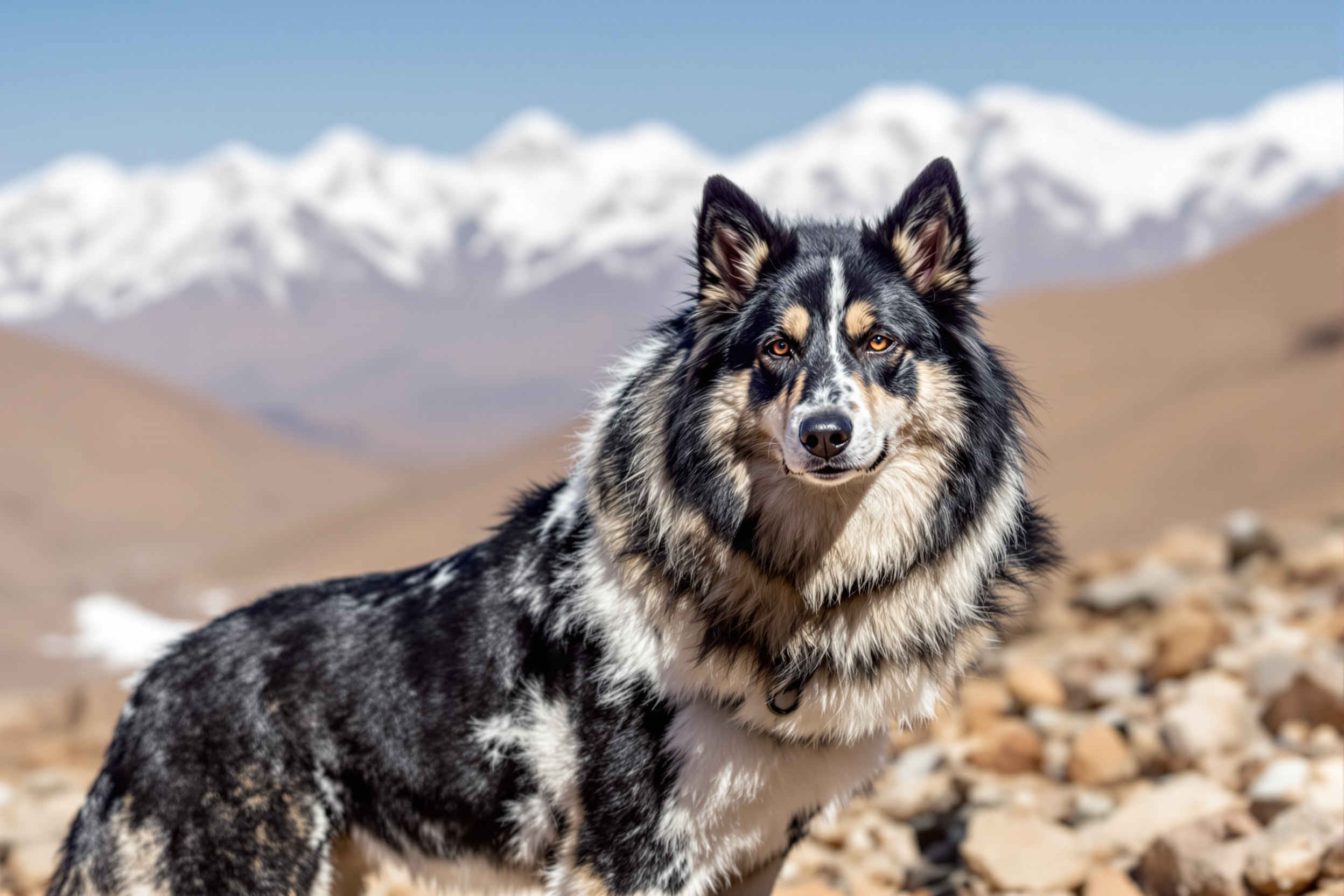
- Country
- Morocco (Atlas Mountains)
- Height
- 20.5-24 inches (52-62 cm)
- Weight
- 50-55 pounds (23-25 kg)
- Coat
- Thick, coarse and weather-resistant, about 6 cm long; heavier ruff at the neck
- Colour
- All colours: white, black, fawn, brindle, or black and white, often with patches
- Other Names
- Aidi, Chien de Montagne de l'Atlas, Atlas Mountain Dog, Berber Dog, Kabyle Dog
- Registry
- FCI Group 2, standard no. 247; not AKC recognised
- Group
- Livestock Guardian / Molossoid
A North African working landrace that has guarded flocks and camps in the Atlas Mountains for centuries, and which remains — unusually for a recognised breed — very largely a functional dog rather than a bred-for-show one.
Names and Confusion
Few breeds carry so many labels. Aidi is the name most used in Morocco. Chien de l'Atlas is the French form under which it entered the FCI system, and it has also been called the Atlas Mountain Dog and the Berber Dog. It was at one point registered under the name Atlas Sheepdog, which was later corrected — and the correction is meaningful, because the Aidi is not a herding dog at all.
It does not gather or drive stock. It lives with the flock and protects it, which is a different job requiring a different temperament. The distinction between herding breeds and livestock guardians is set out under breed groups.
The Work
The Aidi's traditional role is the classic guardian one: raised among the animals it will protect, left to live with them, and expected to make its own decisions about threats without a handler present. In the Atlas and the Rif this has historically meant jackals, and formerly larger predators, as well as guarding nomadic camps and the tents themselves.
The coat is the equipment. The Atlas Mountains are genuinely harsh — hot and dry in summer, snowbound in winter — and the Aidi's dense weather-resistant jacket with its heavy neck ruff handles both extremes and offers real protection to the throat.
Partnership with the Sloughi
The most interesting thing about the Aidi is a hunting arrangement documented in Morocco that pairs it with a completely different breed. The Aidi, with a good nose and stamina, locates and tracks the game. The Sloughi, the North African sighthound, is then slipped to run it down by sight.
It is a deliberate division of labour between a scenting dog and a sighthound, worked as a team — an elegant solution, and one of the few well-attested examples of two distinct breeds being maintained specifically to hunt together.
Character
The Aidi is alert, energetic and territorial, with the independence its work demands. It is powerfully attached to its own household and animals and inherently suspicious of anything outside them. It is a serious guardian, not a companion breed with guardian tendencies, and it is not appropriate for an inexperienced owner or a home without space and a job for it.
It is more agile and considerably lighter than most livestock guardian breeds — closer in build to a large spitz than to a Kangal or a Pyrenean Mastiff — which makes it faster and better suited to the broken mountain ground it comes from.
Status
Recognised by the FCI under standard 247, the Aidi remains scarce outside Morocco and is barely known in the English-speaking world. Within Morocco it continues to work, and its population there is a landrace maintained by function rather than by pedigree — which has kept it robust and typey but makes formal numbers impossible to establish. There has been intermittent concern about dilution through crossbreeding near cities.
Health
No breed-specific inherited conditions are widely documented, which is broadly what one expects of a working landrace never subjected to intensive selection for appearance. Hip dysplasia occurs as in any medium-large breed. The coat needs regular brushing, particularly during seasonal moult. Practical guidance is under grooming.