Kerry Beagle
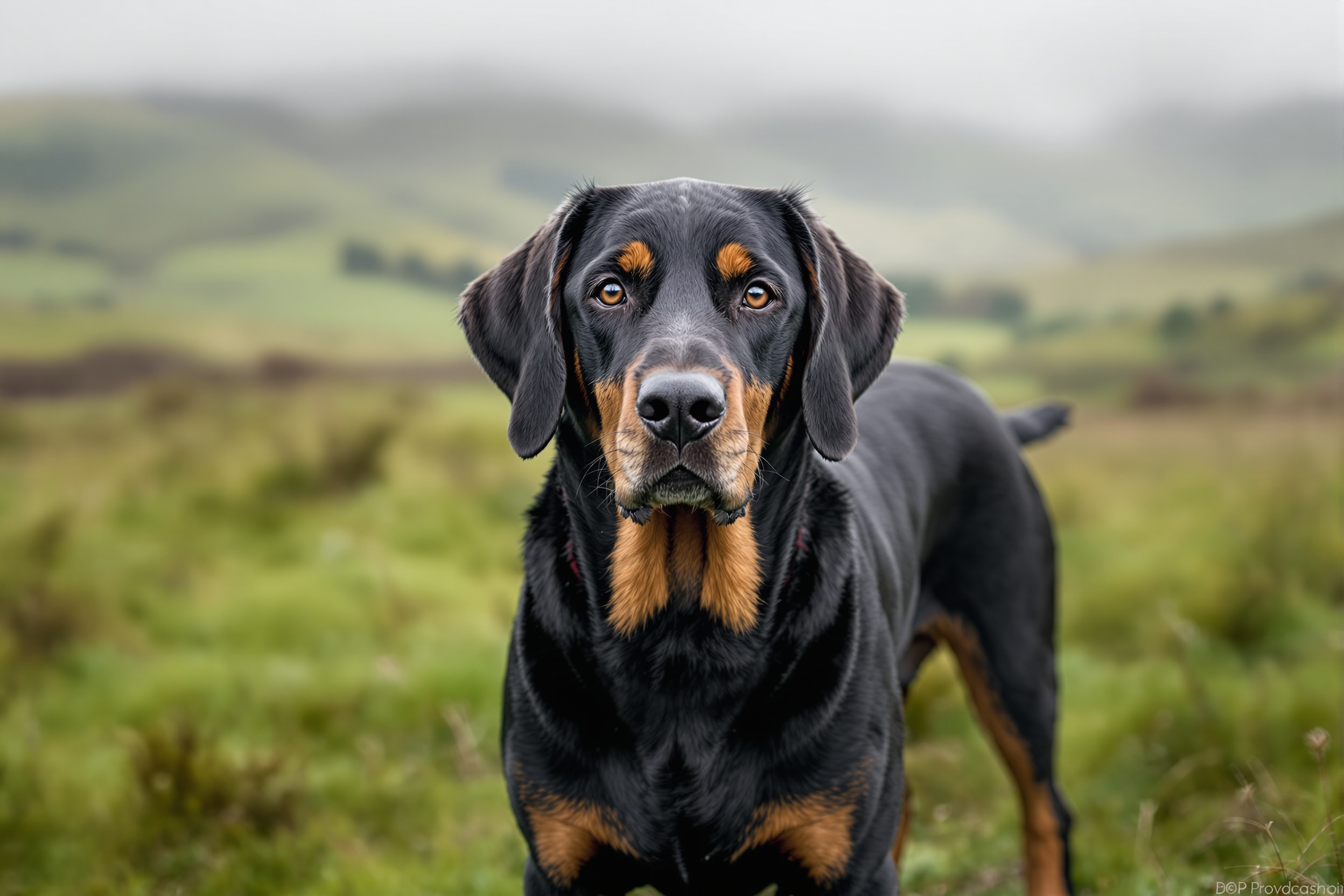
- Country
- Ireland
- Height
- 22-24 inches (56-61 cm)
- Weight
- 45-60 pounds (20-27 kg)
- Coat
- Hard, close and smooth
- Colour
- Black and tan; also blue mottled and tan, tricolour, or tan and white
- Other Names
- Pocadan, Kerry Hound
- Registry
- Irish Kennel Club (native breed); not recognised by the FCI or AKC
- Group
- Scenthound
The Kerry Beagle is the only scenthound native to Ireland, and one of the very few breeds anywhere to have passed through the eye of a needle so narrow that its entire modern population traces to a single surviving pack.
The Name Problem
Start with the obvious objection: it is not a beagle. A Kerry Beagle stands nearly two feet at the shoulder and would look absurd beside the familiar small English hound. Nor is it especially associated with County Kerry, most of its documented history having played out in Limerick and Cork.
The likeliest explanation for the name is linguistic rather than descriptive. "Beagle" in older usage simply meant a hound hunted in a pack, without any implication of size, and the word travelled into Ireland with that broader sense intact. The Irish name is more honest: pocadan, from a root meaning to hunt or to start game.
Origins
The breed's early history is not documented so much as inferred. A large, deep-voiced trailing hound has been present in the south of Ireland for a very long time, and the reasonable assumption is that it arrived with continental contact and was then refined locally — crosses with the old Southern Hound of England and with French hounds are usually proposed, though the evidence is circumstantial rather than recorded.
What is certain is that by the eighteenth century Ireland had a distinct hound of its own, hunted in packs, and prized for a voice that carried across open country.
The Scarteen Pack
By the nineteenth century the type had collapsed almost to nothing. Land reform, emigration and the general contraction of the old hunting establishments took most of the packs with them, and the breed's survival came down to one family's kennel in County Limerick, whose hounds have been kept as a distinct black-and-tan pack for generations. They are known in Irish hunting circles simply as the Black and Tans, and it is from this pack that the modern Kerry Beagle descends.
That is an extraordinarily narrow foundation, and it is the central fact of the breed. Everything else — the consistency of type, the limited gene pool, the difficulty of expanding numbers without importing problems — follows from it.
Emigration and the American Hounds
Kerry Beagles left Ireland with the people who bred them. Nineteenth-century Irish emigration carried the hounds into the American South, where they entered the foundation stock of several American hound breeds. Their contribution is generally credited in the ancestry of the Trigg strain of the American Foxhound and, more substantially, in the development of the Black and Tan Coonhound — whose colour and voice both point back across the Atlantic.
It is a common pattern in hound history: a breed almost extinct at home leaves a much larger genetic legacy abroad than it does in its own country.
Character and Work
The Kerry Beagle is a hunting hound first and a companion second, and honest description matters more here than charm. It has a superb nose, tremendous stamina, and the independence of an animal bred to work far from its handler. It is friendly, tolerant and entirely unsuited to a small enclosed life.
In Ireland today most are hunted on drag lines and on hare, the latter chiefly for the pleasure of following a good pack over rough ground. Hunting on foot behind hounds in the Limerick and Tipperary hills is as much about listening as watching — the voice of a pack working a mountainside is the reason people keep them.
Registry Status
The Kerry Beagle occupies an unusual position. It is recognised as a native Irish breed by the Irish Kennel Club, but it has never been taken up by the FCI or the AKC and has largely stayed outside the show world altogether. Its standard has been maintained by hunting people, for hunting purposes, which has kept it functional and kept its numbers small.
Anyone comparing Ireland's native breeds will find the contrast instructive: the Irish Wolfhound and Irish Setter went international and were reshaped by the show ring, while the Kerry Beagle stayed home and stayed a working hound.
Health and Care
As a working population bred largely outside the registry system, the Kerry Beagle has not accumulated the burden of inherited disease seen in some show breeds, though the narrow foundation is an obvious long-term concern. Practical requirements are those of any large scenthound: a great deal of exercise, secure fencing, and an acceptance that a hound following a scent has stopped listening. General guidance on hound care is covered under exercise and the health guide.