How To Choose Your Dog
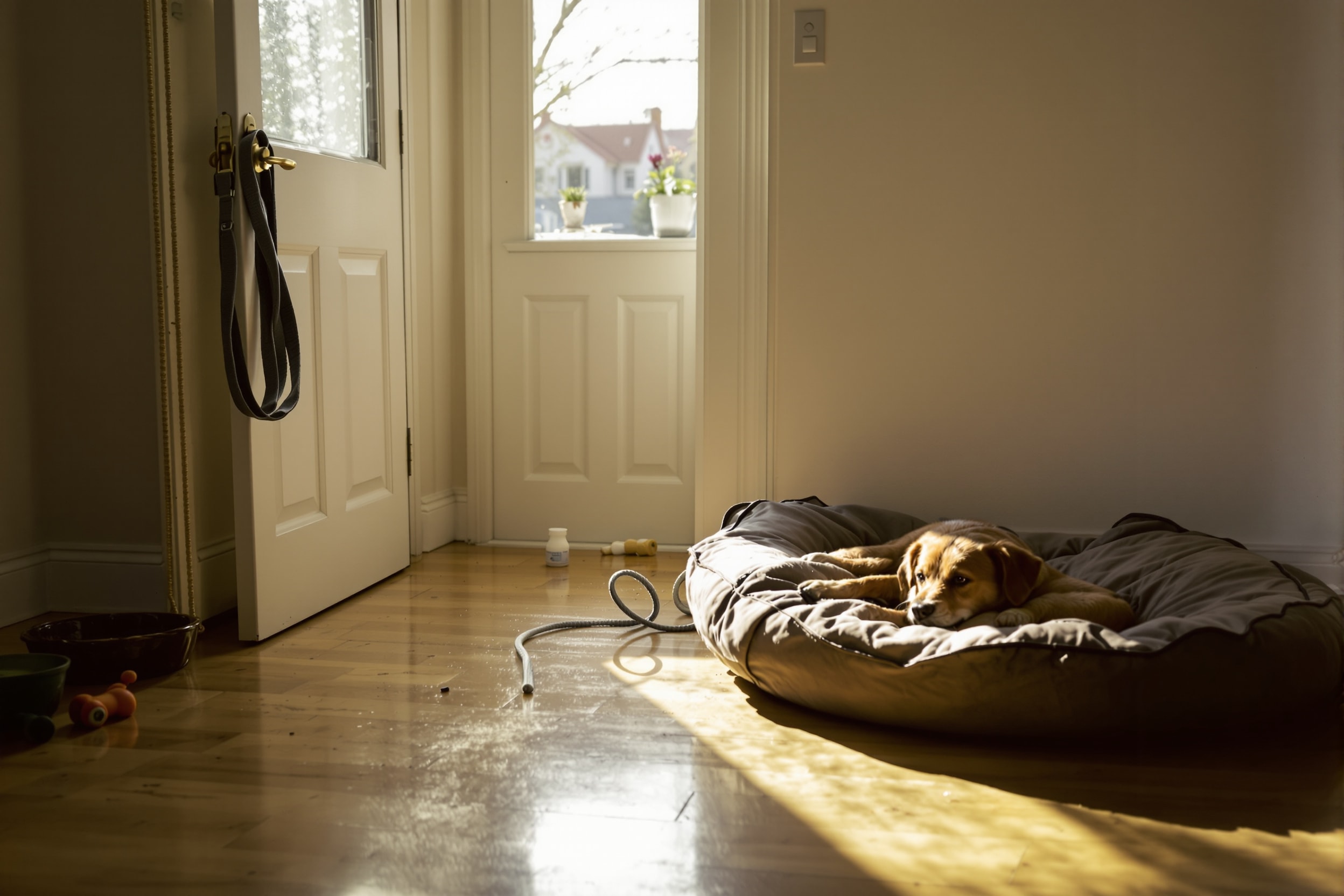
Most unhappy dogs are not badly bred or badly trained. They are simply the wrong dog in the wrong house, chosen by someone who fell in love with an appearance and inherited a job description they had no use for.
Start With Your Life, Not With the Dog
The temptation is to begin by browsing breeds. Resist it. Begin instead by writing down, honestly, what your life actually looks like — not what you intend it to look like once you have a dog.
- Hours alone. How long will the dog genuinely be by itself on a normal weekday? This single number rules out more breeds than any other.
- Exercise you will actually do. In February. In the rain. Before work.
- Space, indoors and out. Including whether your fencing would contain a determined digger or a jumper.
- Household. Small children, elderly relatives, other dogs, cats, livestock.
- Grooming time and budget. A long-coated breed is a daily commitment or a recurring bill, not an occasional chore.
- Noise tolerance — yours and your neighbours'.
- Money. Food, insurance, routine veterinary care and the unbudgeted emergency, over ten to fifteen years.
Then Read the Job Description
Every breed entry on this site opens with what the dog was built to do, and that is the most predictive information available about how it will behave in your house. Traits that look like problems are usually the job showing through.
A terrier digs and kills small animals because it was bred to. A bark-pointing spitz is loud and independent because that is the work. A livestock guardian such as the Chien de l'Atlas is suspicious of visitors because that is the entire point of it. A Jack Russell that dismantles the sofa is a working dog with nothing to work on.
You cannot train these away, and it is unkind to try. You can only choose a dog whose instincts you can live with, or provide a legitimate outlet for the ones you cannot.
Size Is Not the Main Variable
People assume small means easy. It does not. A Jack Russell needs far more exercise and mental work than a Bullmastiff, which is content with a couple of steady walks. A Galgo is a large athletic sighthound that sleeps most of the day.
Energy level, independence and grooming load predict daily life far better than height at the withers.
Puppy or Adult?
An adult dog is very often the better choice for a first-time owner, and it is consistently underrated. Its adult size, coat and temperament are already visible rather than a forecast; house-training is usually done; and a reputable rescue will have assessed its behaviour with children, cats and other dogs.
A puppy offers a blank slate and a great deal of work — house-training, socialisation, adolescence — during which the dog you eventually get is still uncertain. See adopting a dog.
Where the Dog Comes From
Whether you go to a breeder or a rescue, the source matters as much as the breed.
A good breeder will health-test the parents for the conditions known in that breed and show you the certificates unprompted; will let you meet the dam; will ask you as many questions as you ask them; will keep a puppy until it is ready rather than when it is convenient; and will take the dog back at any point in its life. Someone who has puppies of several breeds available immediately, will meet you in a car park, or cannot produce health testing is not a breeder in any meaningful sense.
The American Kennel Club and the UK’s Royal Kennel Club both publish guidance on identifying responsible breeders, and national breed clubs maintain their own referral lists.
Meet the Dog
Breed tells you the distribution; the individual is a draw from it. Within any breed there are bold and shy dogs, busy and placid ones. Meet the animal, meet its mother if you can, and take seriously any reluctance you feel. Walking away from the wrong dog is not a failure — it is the last easy decision you will get.
Take a written list of ordinary situations to a meeting: visitors arriving, traffic passing, time alone and other animals in the home. Ask what has actually been observed and in which setting, rather than accepting a general label such as friendly. A dog that greets adults readily has not thereby been shown to be comfortable with children or cats. Where possible, arrange a quiet walk with the person currently caring for the dog and ask how typical its behaviour is. Separate things you have seen yourself from things you have been told, and leave unanswered questions on the list. If another household member will do much of the handling, include them in the meeting before making a decision.
Once you have chosen, read up on exercise needs, grooming and the health guide before the dog arrives rather than after.