Perro de Presa Mallorquin
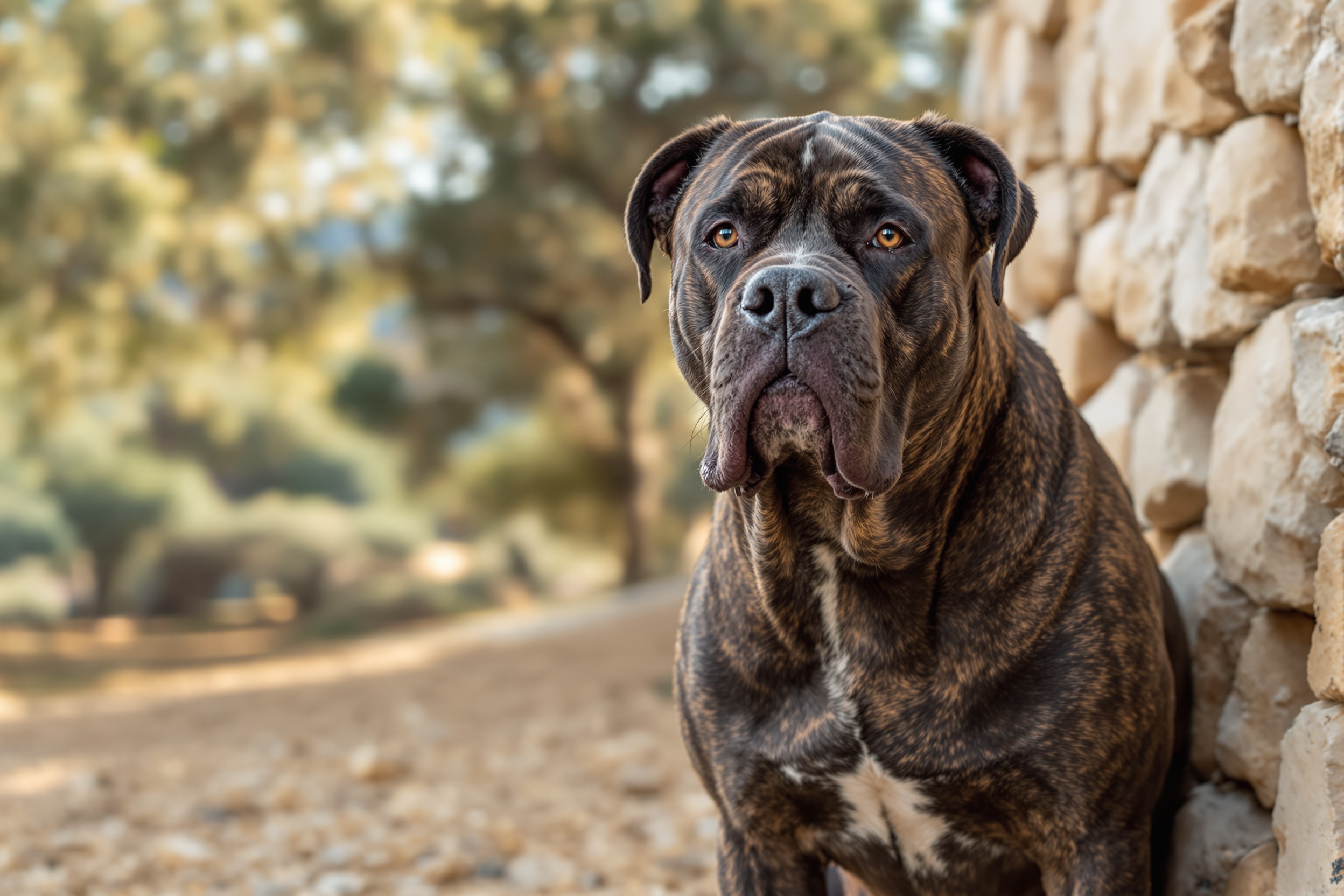
- Country
- Spain (Majorca, Balearic Islands)
- Height
- 21.5-23 inches (55-58 cm) dogs; 20-21.5 inches (52-55 cm) bitches
- Weight
- 77-84 pounds (35-38 kg) dogs; 66-75 pounds (30-34 kg) bitches
- Coat
- Short, coarse and close-lying
- Colour
- Brindle, fawn or black; white markings permitted on feet, chest and muzzle
- Other Names
- Ca de Bou, Majorca Mastiff, Mallorquin Bulldog
- Registry
- FCI Group 2, standard no. 249; not AKC recognised
- Group
- Molossoid
A compact island molosser that came within a few dogs of disappearing altogether, and exists today because a small group of Spanish breeders went looking for what was left in the 1980s.
Two Names, One Dog
The breed carries a Castilian name and a Catalan one, and both are in current use. Perro de Presa Mallorquin is the formal Spanish form — literally the Majorcan gripping dog. Ca de Bou is the Mallorqui, and translates as bull dog in the original working sense of a dog used on cattle. They refer to the same animal, and neither is more correct than the other.
Origins
Majorca had its own heavy working dogs long before the breed was formalised — Iberian mastiff types used for herding, guarding and handling cattle. The distinctive element came from British influence during the eighteenth-century period of British presence in the Balearics, when English bulldog and bull-and-terrier stock reached the islands and was crossed with the local dogs.
The result was a dog considerably lighter and more agile than a mainland Spanish mastiff but heavier-headed and more powerful than a terrier — a specifically insular type, and one that remained a working farm and butcher's dog on Majorca into the twentieth century.
Collapse and Reconstruction
The breed's decline followed the disappearance of its work and, later, of the blood sports some of its dogs had been used in. By the mid-twentieth century the Ca de Bou had effectively ceased to exist as an identifiable population.
Its recovery began in the late 1970s and 1980s, when Spanish breeders assembled surviving dogs of the old type from Majorcan farms and began reconstructing to a written standard. The FCI standard, numbered 249, followed. As with any breed rebuilt from a handful of founders, the modern population is genetically narrow, and responsible breeders treat that as the defining constraint on their work.
Appearance
The Ca de Bou is a study in controlled mass. It is not tall, but it is exceptionally broad and deep through the chest and skull, with a pronounced sexual dimorphism — the difference between dogs and bitches is unusually marked, and the standard specifies it. The head is large and square with a defined stop, the jaw powerful and slightly undershot, and the whole animal reads as compact rather than bulky.
Character
Reports from the breed's own clubs describe a dog that is calm and self-possessed at home, confident rather than nervy, notably tolerant of children in its own family, and reserved with strangers without being reactive. It is a guardian by disposition and does not need to be taught the job.
Like every powerful guardian breed, it needs an experienced owner, thorough early socialisation and consistent training from puppyhood. It is a strong dog with a strong opinion of itself, and it responds badly to harsh handling and well to clear, calm structure. Local legislation on so-called dangerous breeds should be checked, as several jurisdictions place restrictions on molossers by type.
Health
The principal concerns are hip and elbow dysplasia, the heat intolerance that comes with a broad shortened muzzle, and skin fold problems in heavily wrinkled individuals. Majorcan summers notwithstanding, this is a breed that must not be exercised hard in heat. Lifespan is typically ten to twelve years.
Related Iberian guardians — the Perro de Presa Canario, the Spanish Mastiff, the Rafeiro do Alentejo — appear in the breeds list, and the molosser family is discussed under breed groups.