Barbet
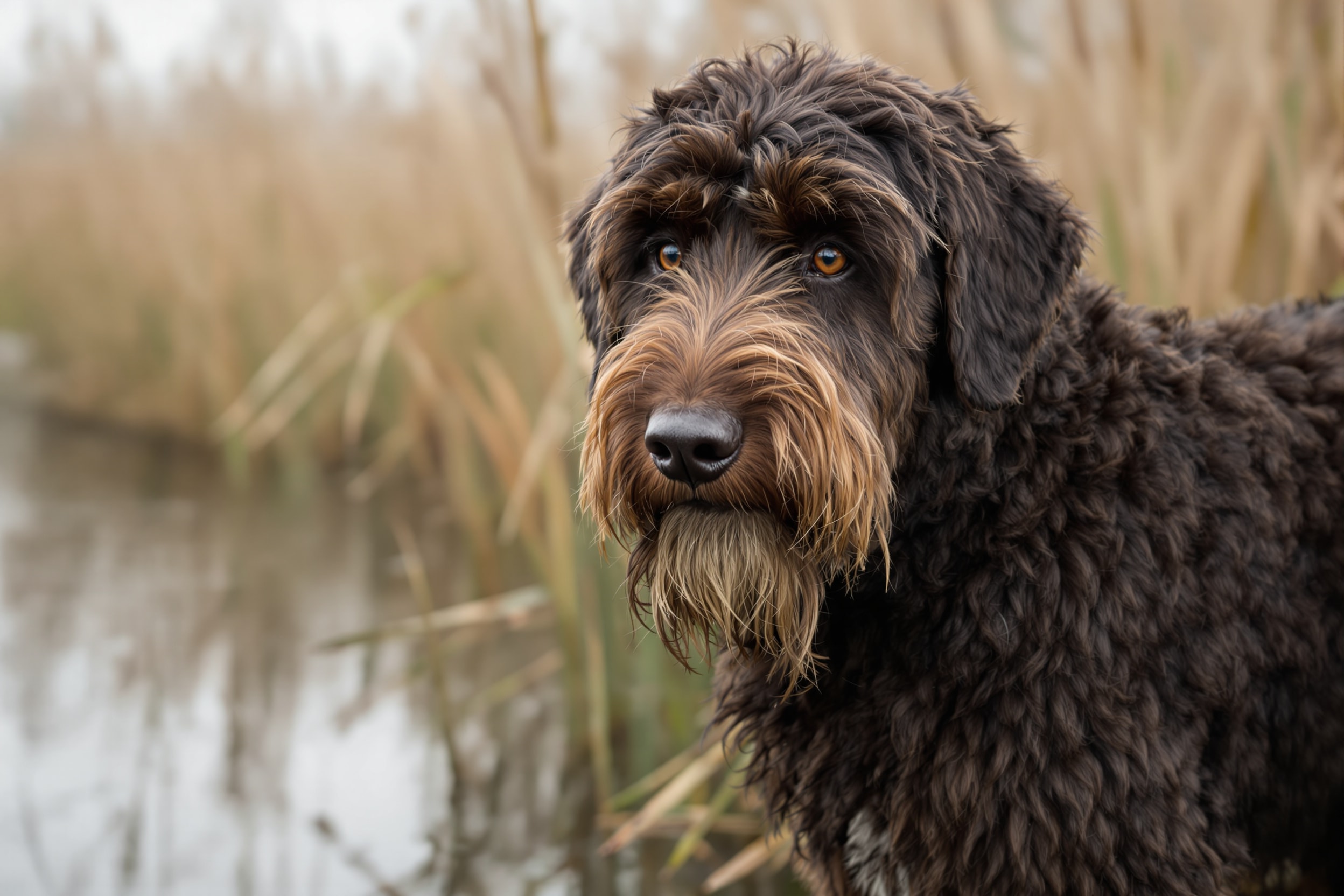
- Country
- France
- Height
- 20.5-25.5 inches (52-65 cm)
- Weight
- 37-62 pounds (17-28 kg)
- Coat
- Long, thick and woolly; curly or wavy, forming cords if left untended
- Colour
- Black, brown, fawn, grey or white, with or without white markings
- Other Names
- French Water Dog, Griffon d'Arret a Poil Laineux
- Registry
- FCI Group 8; AKC (Sporting, 2020)
- Group
- Water Dog
If you want to understand where the curly-coated water dogs came from, the Barbet is the place to start. It is the plainest, oldest and most generic of them — the shaggy French marsh dog that a great many better-known breeds appear to have been carved out of.
The Name
The name comes straight from the French barbe, meaning beard, and the beard is the first thing you notice. A sixteenth-century French writer on hunting is generally credited with fixing the name in print, and the alternative label laineux — woolly — describes the rest of the dog just as bluntly. Practical people naming a practical animal.
A third nickname stuck too, and has never entirely gone away: the mud dog. Barbets have a well-documented enthusiasm for exactly the sort of terrain their coat is worst suited to.
Origins
Woolly-coated water dogs were widespread across Europe by the fourteenth century, appearing under a scatter of local names. Their deeper ancestry is usually traced to corded herding dogs moving west out of Asia, possibly with an infusion from early griffon hounds, though this is reconstruction rather than record.
What matters is the Barbet's position in the family tree. Rather than being one branch among many, it appears to sit close to the trunk. The Poodle, the Briard, several of the Griffon breeds and probably the Portuguese and Spanish water dogs all show its influence, and in older French usage barbet and the early poodle types were not clearly distinguished at all.
The Work
The Barbet was a marsh dog, bred to work cold water for wildfowl. The coat is the whole point: dense, greasy at the base and effectively waterproof, it let the dog spend hours in freezing water and reedbeds without chilling.
It is not an elegant gundog. Compared with a pointer or a setter it is slower, heavier through the body and less refined in the nose. What it offered instead was durability, a phenomenal tolerance for cold and wet, and a willingness to go into water that other dogs declined. Elizabethan English writers describing shaggy water dogs on both sides of the Channel commented on precisely this — and on the amount of work the coat took to maintain.
Near-Loss and Recovery
By the mid-twentieth century the Barbet had nearly disappeared, its numbers reduced by two world wars and by the rise of specialist gundog breeds that did narrower jobs better. Reconstruction from the 1970s onwards was carried out from a very small base, and the modern breed remains uncommon. The American Kennel Club did not grant full recognition until 2020, one of the most recent additions to its Sporting Group.
Character and Care
Barbets are sociable, even-tempered and notably people-oriented — a working dog bred to cooperate closely rather than to range independently. They are active without being frantic, get on well with children, and dislike being left alone for long stretches.
The coat is the commitment. Left alone it mats quickly and will cord; kept properly it needs thorough brushing several times a week and regular professional attention. Ears should be checked and dried routinely, as with any drop-eared water breed. Practical guidance is under grooming.
Health concerns are those typical of a medium-sized sporting breed rebuilt from few founders: hip dysplasia, entropion and other eye conditions, ear infections, and the usual caution about a limited gene pool. Other water and retrieving breeds are covered under breed groups.