Blue Lacy
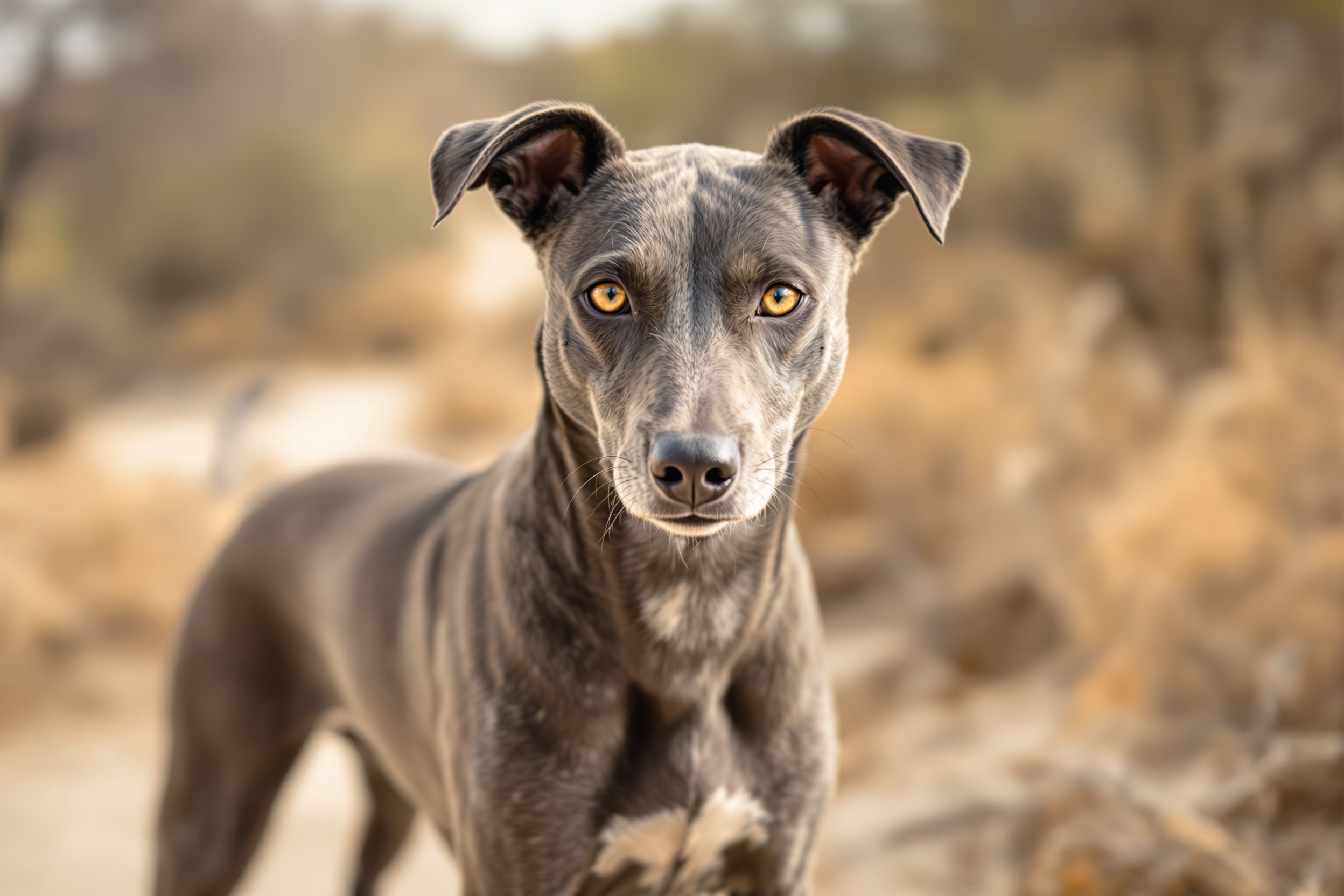
- Country
- United States (Texas)
- Height
- 17-21 inches (43-53 cm)
- Weight
- 25-50 pounds (11-23 kg)
- Coat
- Short, smooth and tight
- Colour
- Blue (any shade of grey from light silver to charcoal), red, or tricolour
- Other Names
- Lacy Dog, Lacy Game Dog, Texas Blue Lacy
- Registry
- Not recognised by the AKC or FCI; registered by working cur associations
- Group
- Cur / Herding and Hunting
A purely American working dog, developed by one family on the Texas frontier for a job that barely exists any more, and preserved by hunters and ranchers rather than by any kennel club.
The Lacy Brothers
The breed takes its name from a family who settled in the Texas Hill Country, in the Marble Falls area, in the middle of the nineteenth century. They needed a dog for a specific and difficult job: working the semi-feral hogs that ranged the brush country, penning and driving them, and handling cattle over the same rough ground.
The dog they produced was medium-sized, extremely fast, hard-driving and tough enough to work all day in Texas heat. The exact foundation stock is not documented — greyhound, scenthound and herding cur are the usual candidates, and the speed and the nose both suggest the first two — but the family's records are lost and the ancestry is reconstruction.
What is documented is the type they arrived at and the fact that it bred true.
The Colour
The "blue" of the name is the dilute grey that runs through the breed and is its signature, ranging from a pale silver to a deep charcoal. Red and tricolour dogs occur and are equally correct — a red Lacy is still a Blue Lacy, which reliably confuses newcomers.
Bright amber to orange eyes are characteristic and unusually striking against the grey coat.
State Dog of Texas
In 2005 the Texas Legislature adopted a resolution naming the Blue Lacy the official State Dog Breed of Texas, on the grounds of its origin in the state and its historical role in the cattle and hog industries. It is one of very few American breeds to hold such a designation.
The recognition is genuine and the paperwork exists, but it should not be mistaken for kennel-club recognition, which the breed has never sought and largely does not want. Registration is handled by working cur and Lacy associations that record ability alongside pedigree.
Character and Work
The Blue Lacy is intense. It is highly intelligent, extremely biddable to a handler it respects, and possessed of an energy level that is difficult to overstate. It works stock, trails game, and is used as a blood-tracking dog for wounded deer, a role in which its nose and stamina are highly regarded.
As a pet it is a poor fit for most households, and its own breeders say so. Without work and space it becomes anxious, destructive and vocal. It needs a job, serious daily exercise and a securely fenced acreage rather than a yard. In the right setting it is exceptional; in the wrong one it is a problem dog through no fault of its own.
Lacies are typically sensitive to harsh handling and respond far better to consistent, calm direction — a working trait, not a delicacy.
Health
As a breed selected almost exclusively for function and never passed through a show-ring bottleneck, the Blue Lacy is notably healthy, and no breed-specific inherited disease is widely documented. Some individuals show colour dilution alopecia associated with the dilute coat, and skin sensitivity and sun exposure can be issues for very light dogs.
Lifespan is typically twelve to sixteen years, which is long for a dog of its size and a further consequence of function-first breeding. Other American working curs — the Catahoula Leopard Dog, the Black Mouth Cur, the Mountain Cur — appear in the breeds list, and exercise requirements are discussed under exercise.