Scottish Terrier
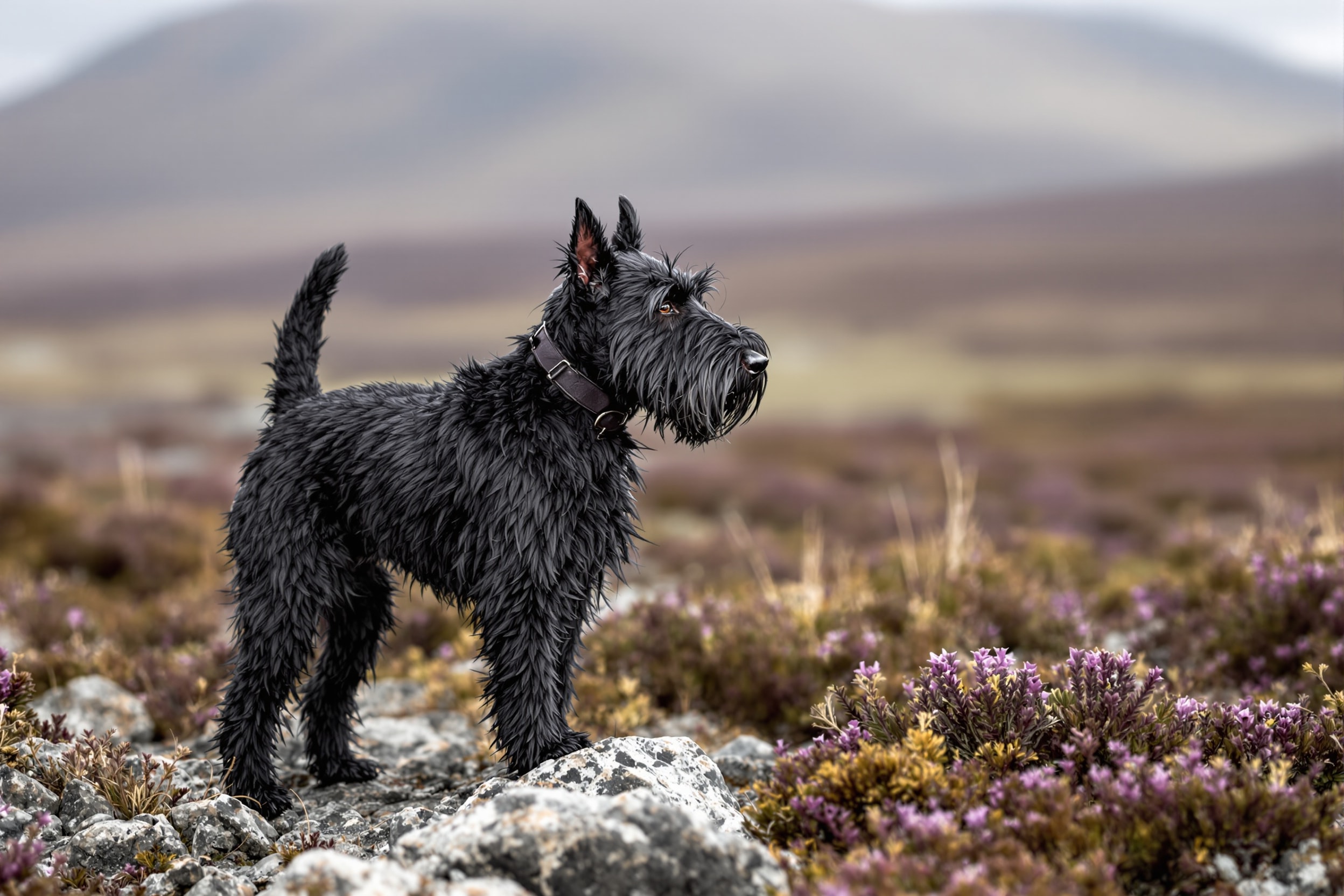
- Country
- Scotland
- Height
- 10-11 inches (25-28 cm)
- Weight
- 18-22 pounds (8-10 kg)
- Coat
- Harsh, wiry weather-resistant outer coat over a dense soft undercoat
- Colour
- Black, wheaten, or brindle of any shade
- Other Names
- Aberdeen Terrier, Scottie
- Registry
- AKC (Terrier, 1885); The Kennel Club; FCI Group 3
- Group
- Terrier
Probably the most recognisable dog silhouette in the world, and one of the least accurately understood characters behind it. The Scottie is not a decorative dog with a famous outline; it is a Highland working terrier that happens to have a famous outline.
Highland Origins
The Scottish Terrier belongs to a family of small Highland and Island working terriers that also produced the Cairn, the West Highland White, the Skye and the Dandie Dinmont. For most of their history these were not separate breeds at all but regional and estate strains of a single working type, sorted by locality and by what a particular laird preferred.
The job was killing vermin — rats, foxes, badgers — in rocky terrain, going into a cairn or an earth after an animal that could and would fight back. The Scottie's construction is a direct answer: short heavy-boned legs to work in confined space, a deep chest for lung capacity, powerful jaws out of all proportion to the head, and a strong thick tail, which historically gave a handler something to pull on.
The name Aberdeen Terrier reflects the strain's nineteenth-century association with that area. The breed was recognised by the American Kennel Club in 1885, making it one of the earliest terriers registered there.
The Coat
The double coat is functional and its maintenance is a genuine consideration. The harsh outer jacket sheds water and resists thorn; the dense undercoat provides insulation. Shown dogs are hand-stripped — the dead outer hair plucked out by hand — rather than clipped, because clipping removes the harsh guard hairs and leaves a soft, colour-faded coat that no longer does its job.
Pet owners frequently clip for convenience, which is a reasonable trade if the consequences are understood. The furnishings on the legs and beard need regular attention either way.
Character
Scotties are independent, dignified, determined and reserved — a distinctly adult sort of dog even in puppyhood. They bond intensely with their own people and are frequently indifferent to everyone else. They are alert watchdogs with a bark far bigger than the body producing it.
Training requires patience and a light touch. This is a breed that will consider a request, weigh it, and decline, and it does not respond to force. It retains real prey drive and terrier reactivity toward other dogs, and it will dig. None of this is a fault; it is the breed doing what it was built for.
Health
Three breed-specific concerns are well documented and worth naming.
- Von Willebrand disease, an inherited bleeding disorder, occurs in the breed and can be tested for. It matters most before any surgery.
- Scottie cramp, a hereditary and generally benign movement disorder that causes temporary difficulty walking under excitement or stress. It is not painful and most affected dogs live entirely normal lives.
- Transitional cell carcinoma of the bladder occurs at a markedly elevated rate in the breed compared with dogs generally. Owners should take persistent urinary symptoms seriously and mention the breed to their veterinary surgeon.
Craniomandibular osteopathy and patellar luxation also occur. Responsible breeders test for von Willebrand disease. General guidance is in the health guide, and the other Highland terriers are listed in the breeds list.