Shih Tzu
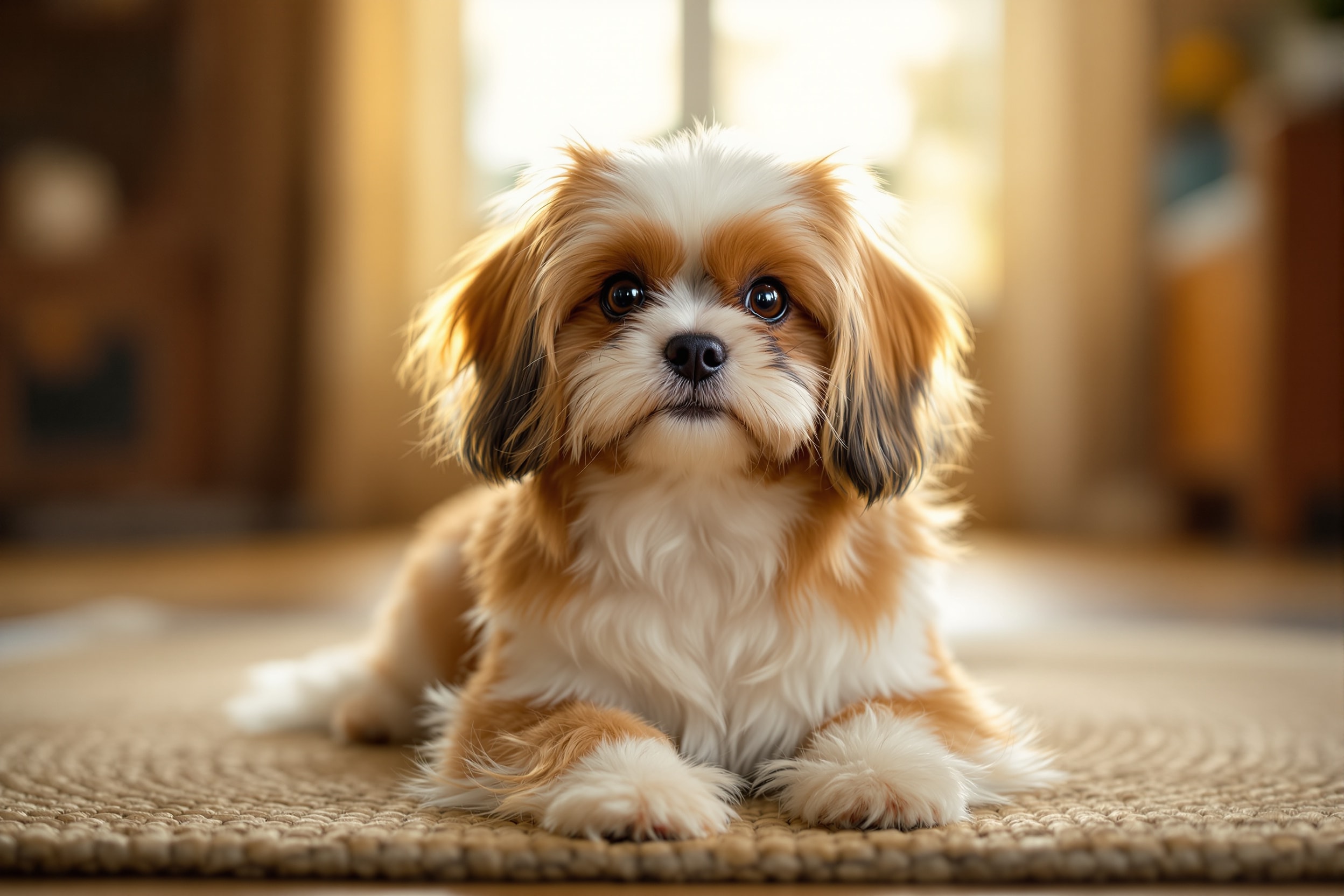
- Country
- Tibet and China
- Height
- 8-11 inches (20-28 cm)
- Weight
- 9-16 pounds (4-7 kg)
- Coat
- Long, dense and flowing double coat
- Colour
- All colours permitted; a white blaze and white tail tip are prized
- Other Names
- Chrysanthemum Dog, Lion Dog
- Registry
- The Kennel Club (1940); AKC (Toy, 1969); FCI Group 9
- Group
- Toy / Companion
A companion dog with an unusually well-documented and unusually political history — bred in palaces, nearly lost with the dynasty that kept it, and rebuilt in the West from a founding population small enough to count on your fingers.
Tibetan Origins
The Shih Tzu's ancestry is Tibetan rather than Chinese. Small long-coated dogs were kept in Tibetan monasteries, where the lion held religious significance and dogs resembling the traditional depiction of a lion were valued accordingly. Such dogs were periodically sent to the Chinese imperial court as tribute.
In the palace they were crossed with Chinese small-dog stock — the Pekingese most obviously — and refined into the animal we now recognise. The name means simply lion, and the alternative nickname Chrysanthemum Dog describes the way the facial hair grows outward from the nose in every direction, like petals.
The Palace Dogs
The breed was maintained inside the Forbidden City by palace eunuchs who kept their own records and, by all accounts, competed fiercely to produce the most admired dogs. The animals were not generally available outside the court, and were not exported.
The Dowager Empress Cixi, who died in 1908, is the figure most associated with the palace breeding programme, and after her death both the standard of care and the consistency of type deteriorated. The fall of the dynasty in 1912 and the subsequent decades of upheaval effectively ended the tradition.
Fourteen Dogs
A small number of Shih Tzu reached Britain, Norway and elsewhere in the 1930s, and it is from these that the entire modern breed descends. The founding population is generally given as fourteen dogs — thirteen Shih Tzu and, in a single documented and controversial outcross in the 1950s, one Pekingese.
Every Shih Tzu alive is descended from that group, which makes the breed one of the most genetically constricted popular dogs in the world. It was recognised by The Kennel Club in 1940 and by the American Kennel Club in 1969, since when it has been consistently among the most popular toy breeds.
Character
The Shih Tzu was bred for one purpose — companionship — over a very long period, and it shows. It is affectionate, outgoing, confident without being yappy, and notably less nervous around strangers than many toy breeds. It gets on well with children and other animals and is happy in a small home.
The characteristic drawbacks are a certain stubbornness in training, best met with patience and food rather than pressure, and a tendency to house-train slowly. It is a genuinely low-exercise dog, which is part of its appeal and part of its weight problem.
Health
Two areas deserve real attention. The first is the brachycephalic face. The shortened muzzle brings a well-documented set of problems: breathing difficulty, poor heat tolerance, dental crowding and eyes that sit prominently in shallow sockets and are vulnerable to ulceration and injury. Prospective owners should seek out breeders selecting for open nostrils and a more moderate face, and should never exercise the dog hard in warm weather.
The second is inherited disease arising from the narrow founding population — including intervertebral disc disease, patellar luxation, hip dysplasia and progressive retinal atrophy. Reputable breeders screen for these.
The coat is a serious daily commitment if kept long: it mats readily and needs thorough brushing every day, which is why many owners keep their dogs in a short trim. See grooming and the health guide.